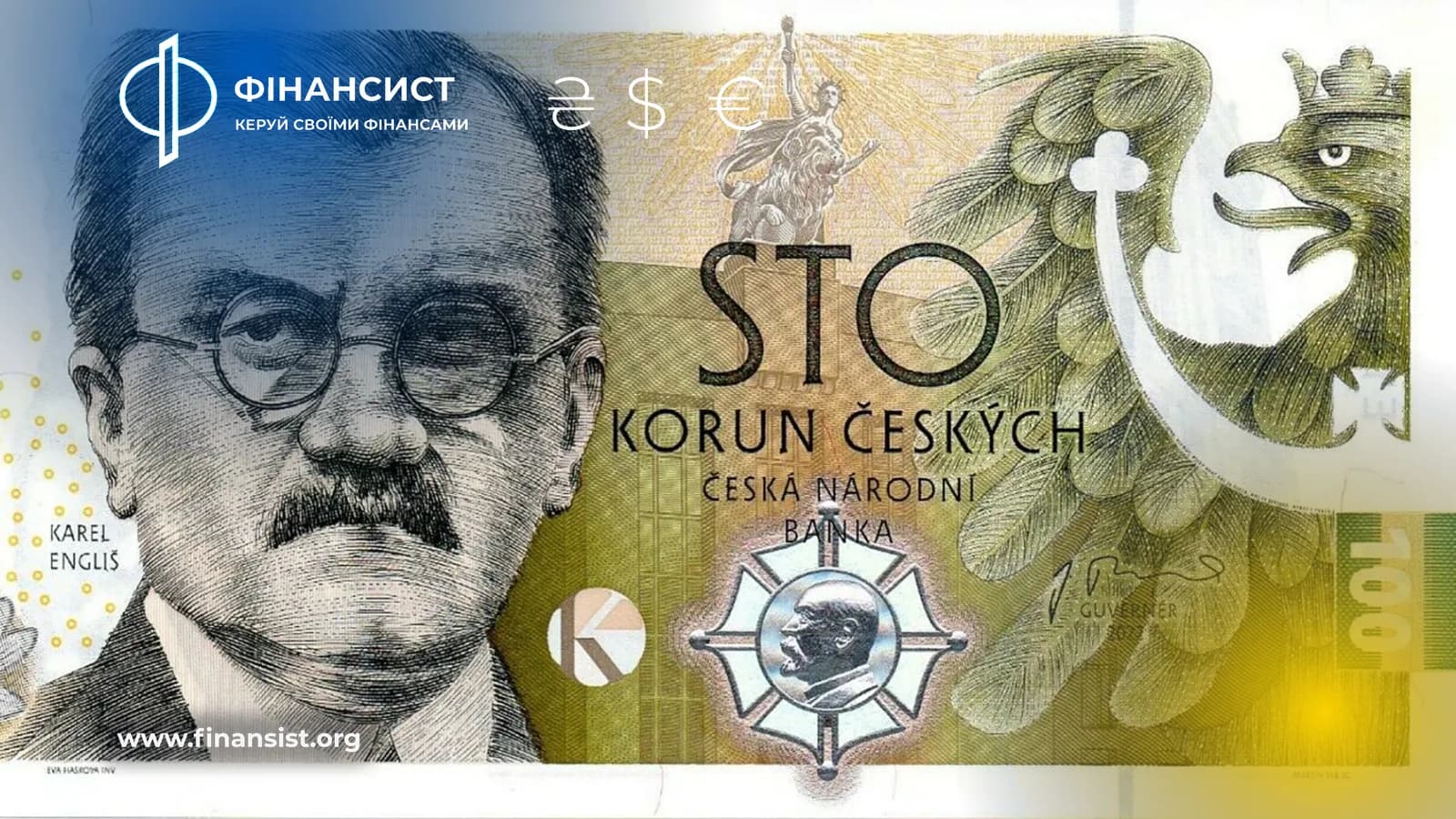
If you work in Czechia, the main question is not how many hryvnias the Czech koruna costs today, but how much of each salary the road to Ukraine will "eat". The difference between the worst and the best way to transfer money easily amounts to several percent of the sum, and over a year that is real money. Below is how to build a scheme so that you lose as little as possible.
Czech koruna to hryvnia: why the "paper" rate is not the same as the rate you actually get
The official rate of the Czech koruna to the hryvnia is set by the NBU, and you can view it on the currency page together with a chart and history. But you convert real money not at the official rate, but at the rate of a bank or service, which has its own difference between buying and selling, plus a fee.
The size of this difference is clearly visible in the example of the euro. As of 28 November 2026, the official NBU rate is UAH 49.49 per euro. Meanwhile, monobank buys euros at UAH 49.29 and sells at UAH 49.99, so the spread is UAH 0.70, about 1.4% of the rate. At PrivatBank, in one of the offers for the same date, it is UAH 48.90 for buying and UAH 49.90 for selling, so the spread is already UAH 1.00, about 2%. See the latest figures for all banks on the rate comparison page, because they change during the day.
Why does this matter for a migrant worker? Because every extra conversion is another such spread. A scheme "koruna - euro - dollars - hryvnias" with two or three exchanges can cost noticeably more than "koruna - hryvnias" in one step.
How to receive a salary in CZK: account, cash or card
The simplest and cheapest option is a salary paid to a Czech bank account in korunas. The employer pays free of charge within the country, and you do not pay for conversion until you decide to transfer money. To open an account you usually need an identity document and proof of temporary protection status or a residence permit, and some banks also ask for a residential address. Each bank has its own conditions, so check them before visiting.
What to consider:
- Contract and payment to an account. A salary "in an envelope" leaves you without proof of income, and therefore without a credit history and protection in case of a dispute.
- A bank with free service. Compare the monthly account fee and the fees for SEPA transfers and cash withdrawals.
- A second account or card. If you want to keep part of your money in euros, it is convenient to have a separate currency account, but check whether you will be charged for it.
We wrote separately about how payments for Ukrainians in Czechia may change: Czechia is preparing new payment conditions for Ukrainians with temporary protection. This will help you understand which payments it is better not to count on in advance.
Ways to transfer money from Czechia to Ukraine: comparison
The main options are a transfer to a Ukrainian card via international payment systems, a SWIFT payment, a SEPA transfer in euros to an account at a Ukrainian bank, and specialized services such as Wise or Revolut. We covered the general picture of NBU limits and payment mechanics in the article Sending money abroad from Ukraine in 2026, and here it is the view from the Czech side.
| Method | Speed | Costs | Convenience |
|---|---|---|---|
| Transfer to a card | Minutes | Fee and margin | High |
| SWIFT payment | 1-3 days | Expensive | Medium |
| SEPA in euros | 1-2 days | Low | Medium |
| A Wise-type service | From minutes to days | Transparent fee | High |
We deliberately do not state exact rates: they change, so before each transfer check the calculator in the bank or service itself. Pay attention not to the "0% fee" in advertising, but to the final amount the recipient will get.