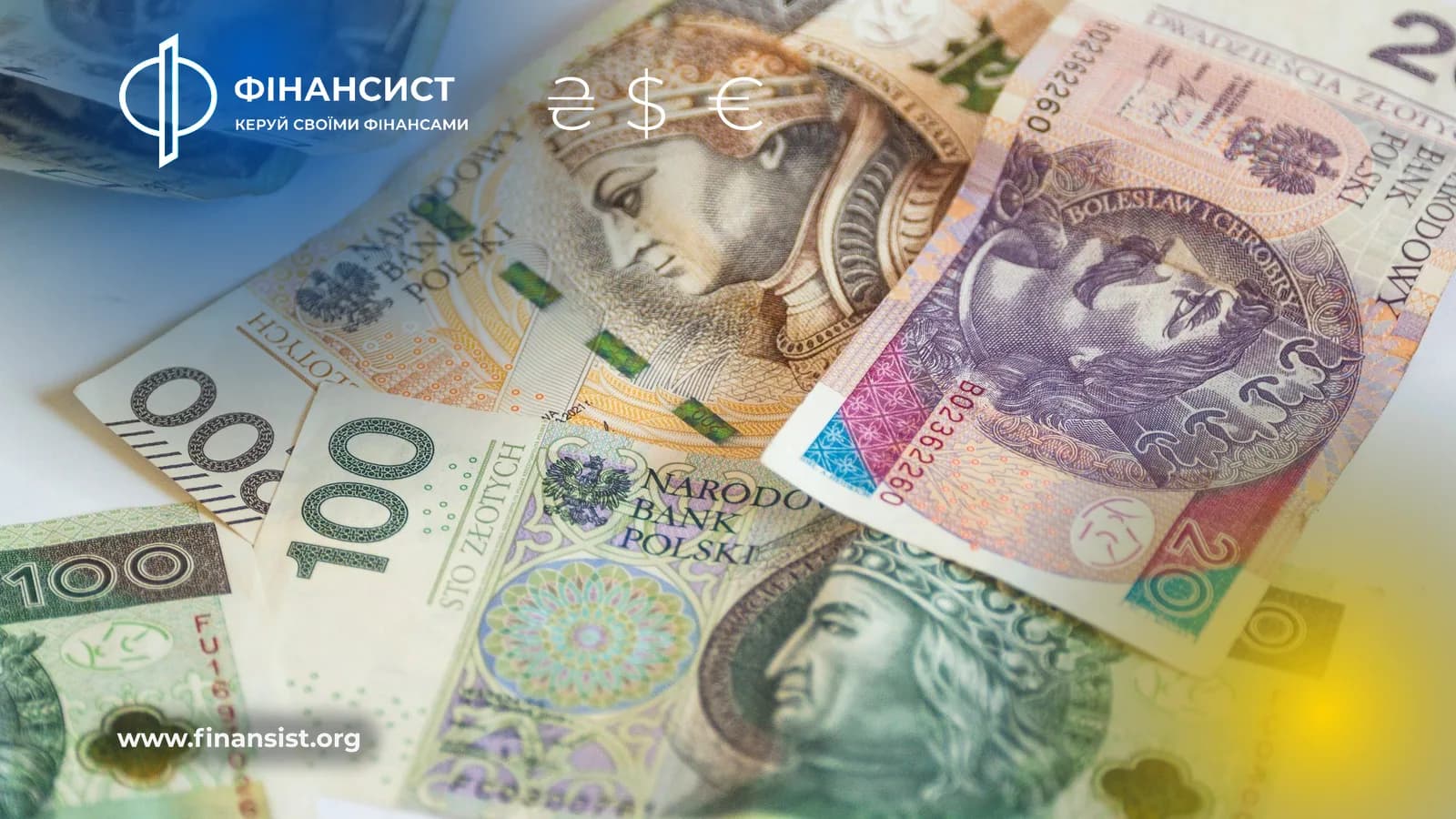
For those who work or study in Poland, receive a salary from there or regularly buy goods there, the zloty is not an exotic, but an everyday currency. The problem is that in Ukrainian banks and exchange offices, PLN is not exchanged as willingly and not as profitably as dollars or euros. Below we will analyze why this happens and how to lose less.
Where does the zloty exchange rate come from?
Official course zloty to hryvnia daily set by the NBU. This is a reference point for reporting, customs and contract settlements. The average person almost never buys or sells currency with it: banks and exchangers set their own bid and ask rates, and the difference between them is called the spread.
Everything is transparent with the dollar and the euro: the market is deep, liquidity is high, and spreads are small. For example, as of November 17, 2026, the purchase price for the euro in Monobank is UAH 49.78, and the sale price is UAH 50.58, i.e., the spread is UAH 0.80. In PrivatBank, the purchase price for euros is 49.70, the sale is 50.70 UAH, the spread is 1.00 UAH. The difference for each euro seems small, but for thousands of euros it is already tangible money. Always see the current numbers on the page comparison of courses, because in a few days they will change.
The zloty spreads are usually wider than the euro spreads. The reason is simple: demand is lower, and many institutions do not count PLN directly, but through a cross rate to the dollar or euro. Each such transfer adds margin.
Who needs zlotys and why?
- Salaried and seasonal workers. The salary is received in PLN, and the money is needed in hryvnias for the family in Ukraine.
- Students. Payment for education, housing and subsistence in Poland is in zlotys.
- Business owners or FOP. Purchases from Polish suppliers, delivery, marketplaces.
- Travelers and shopping. Short trips where it makes more sense to have some local cash.
Each scenario has its own optimal way, so there is no universal answer "where is best". There is a rule: the fewer conversions in the chain, the fewer losses.
The main methods of exchange and how they differ
Cash in money changers
Exchangers in big cities usually take PLN, but their rate depends on location and demand. The spread is the widest near train stations and in tourist areas. Before the exchange, you should walk through several points or take a look in advance exchange rates on the site. If you need a nearby point, there is one offline exchangers. For large sums, negotiate the exchange rate before handing over the money.
Bank branches
In branches, the exchange rate for PLN is often worse than in the application, and there may also be restrictions on the amount of cash and the availability of bills. The bank may not have zlotys "in stock", so it is better to call in advance.
Card operations
If you pay with a Ukrainian card in Poland, the bank converts the zloty into the hryvnia (or through the dollar or euro) at its own rate, and sometimes adds a commission. Conditions differ between banks and should be read in the tariffs of a specific card. Also, if possible, choose to pay in local currency, not in hryvnias: the offer to "pay in hryvnias" at the terminal is almost always unprofitable.