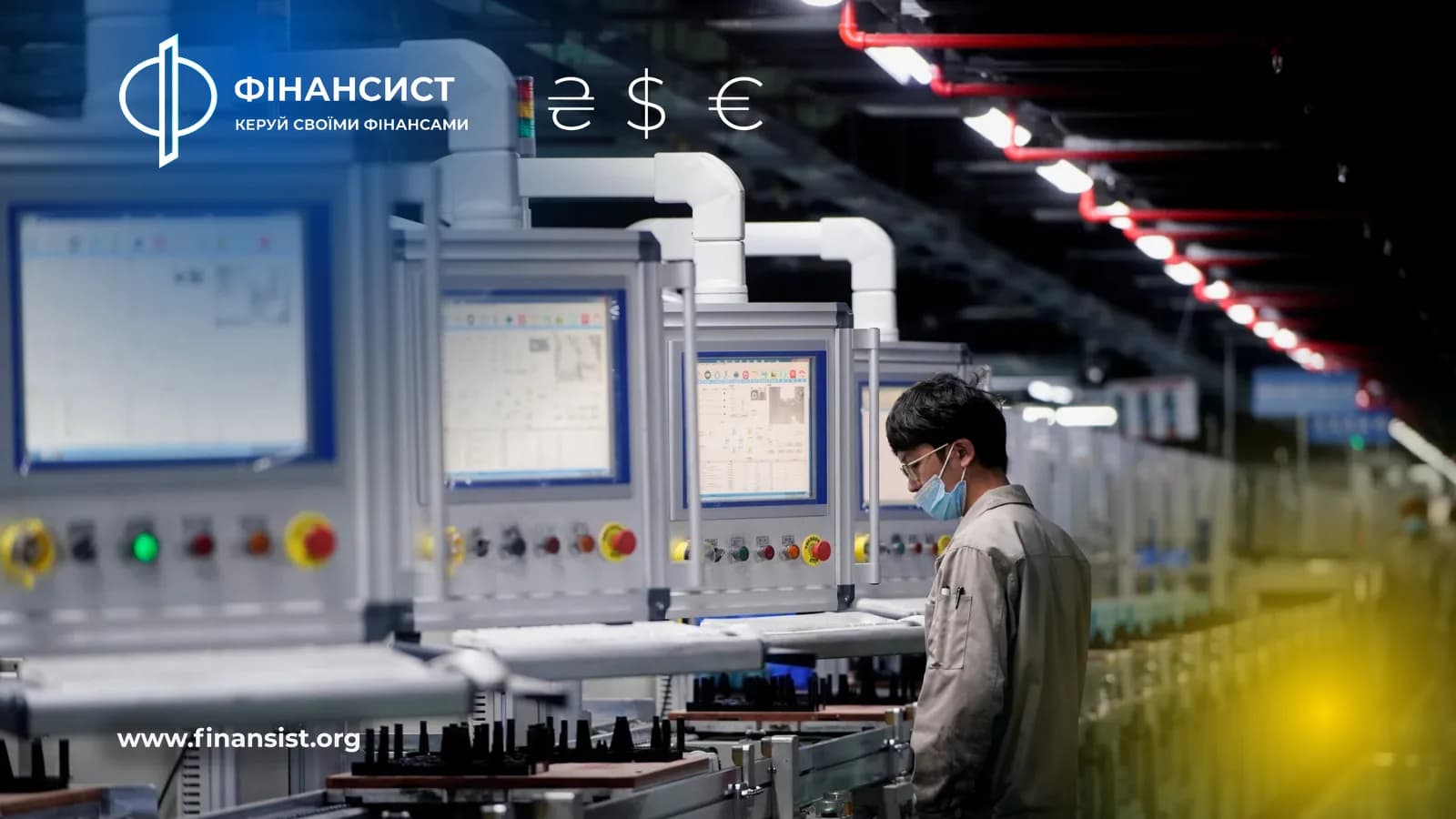
The economy of China - the second largest in the world - slowed down faster than analysts expected in October. Retail sales, industrial production and fixed investment all missed forecasts at the same time, raising concerns about the sustainability of global growth, which is increasingly dependent on Chinese exports.
According to data released on Monday, retail sales - a key indicator of consumer demand - rose just 0.4% year-on-year in October, while economists had expected +0.8%. This is a noticeable slowdown compared to September, when the indicator reached 1.1% - the maximum for six months. Industrial production added 4.8% against the forecast of 5.3% and also slowed from September's 5.5%, the highest level in five months. Fixed capital investment, including real estate and infrastructure, fell 8.1% in the first ten months of the year - significantly worse than the -7% expected and the deepest fall outside the covid-19 period.
Labor market and inflation
The weakness of the economy also affected the labor market: overall unemployment decreased slightly in October to 5.1%, but unemployment among young people aged 16-24 (excluding students) remained close to the annual maximum of 18% in September. Consumer inflation slowed to 0.7% in October after two months of growth. Goldman Sachs expects China's GDP growth to slow to 4.6% this year from 5% in 2025 and to 4.5% in 2027, while inflation will remain close to zero.
The contrast remains between weak domestic demand and record exports, which jumped 35.2% year-on-year in October, and China's trade surplus has already surpassed the $1 trillion mark, the fastest in the country's history. In a year, the surplus may break last year's record of $1.2 trillion. Analysts warn that this dependence on external demand makes the Chinese economy vulnerable to external shocks - in particular, to a possible cooling of investment in AI infrastructure against the background the scandal surrounding Nvidia and restrictions on the supply of chips, as well as to new trade restrictions from the European Union.
For the Ukrainian reader, these data are important first of all as an indicator of sentiment on world markets: the slowdown of the world's second largest economy traditionally entails fluctuations in raw material prices and appetite for risk, which is felt both on currency and stock markets.