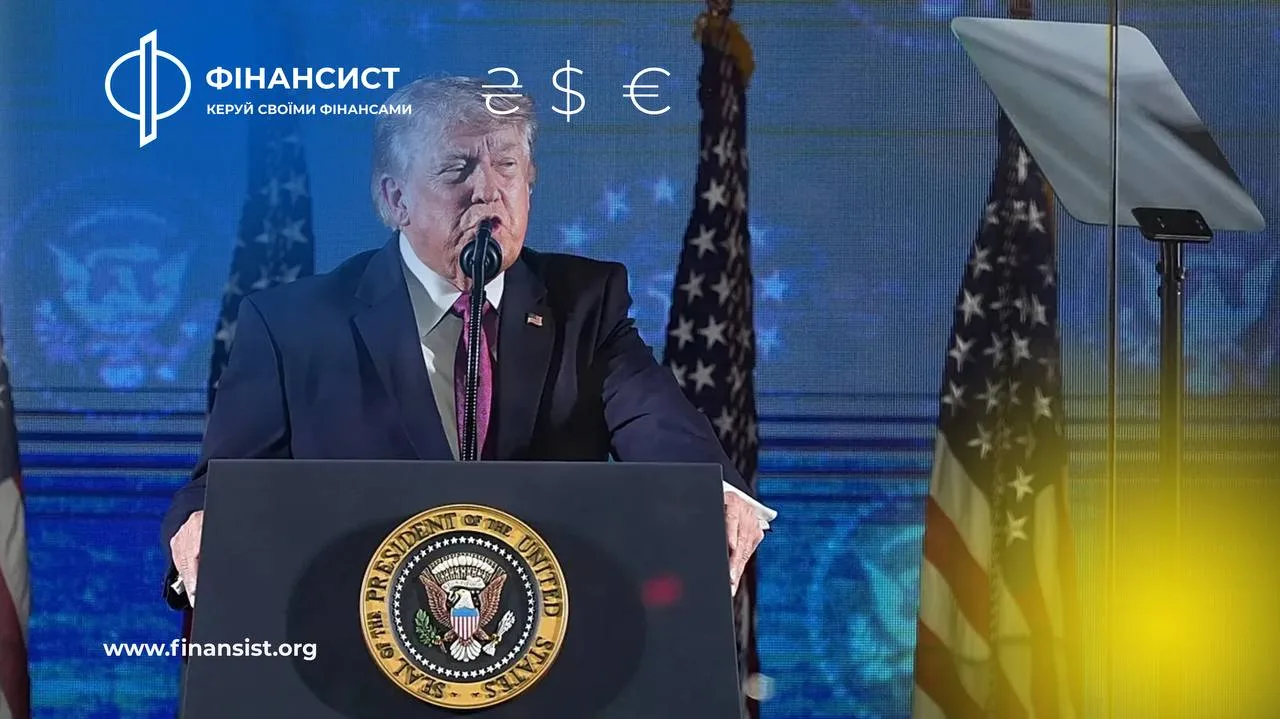
The US introduced new tariffs for 60 countries: who were affected by the restrictions
BusinessBy: Редакція ФінансистJuly 24, 20263 min read
Share:
The USA has officially introduced new import duties
On July 24, the administration of Donald Trump introduced new import tariffs on goods from 60 countries around the world. The new rates came into effect immediately after the temporary universal 10 percent duty, which previously applied to most imported products, expired.
The new restrictions became the next stage of the US trade policy aimed at strengthening control over international trade and combating the use of forced labor in the production of goods.
Which countries fell under the new tariffs
Basic 10 percent duty applies to goods from a number of countries, including United Kingdom, Canada, Mexico, India, Indonesia, Malaysia, Pakistan, Bangladesh, Argentina, Cambodia, Sri Lanka, Ecuador, Jordan and a number of other states.
For European Union, Japan, South Korea, Taiwan and Switzerland rates have been established, which, together with the current customs duties, form the total burden in 10% or 12.5%.
The maximum rate 12.5% received more 38 countries, among which China and Vietnam.
China remains one of the main objects of trade pressure
The US administration paid special attention to China. In Washington, they said that they plan to return the general level of tariffs on Chinese goods to 20%, as agreed during the talks between Donald Trump and Xi Jinping at the end of 2025.
The American side continues to accuse China of using forced labor, particularly for the Uyghur minority. Official Beijing categorically rejects these accusations.
Not all goods fell under the new restrictions
Although the new tariffs cover almost all American imports, the US government has left a list of strategically important exemptions.
Exempted from additional duties:
- oil and natural gas;
- fertilizers;
- individual food products;
- aircraft and aviation components;
- critically important minerals;
- cars, steel, aluminum and copper, which are already under separate tariff regimes.
In this way, the administration seeks to minimize the impact of new measures on industries critical to the US economy.
Why did the US introduce new tariffs
The White House explains the decision by the need to strengthen the fight against the use of forced labor in global production chains.
According to US Trade Representative Jamieson Greer, American law has banned the import of goods produced with forced labor for almost a century, and now Washington expects similar actions from its trading partners.
New duties were introduced in accordance with of Section 301 of the Trade Act of 1974, which allows the US administration to apply trade restrictions without using the emergency mechanism that was previously partially blocked by the Supreme Court.
How the US trading partners reacted
IN European Commission said the new tariffs are in line with previous agreements between the EU and the US and set the stage for further negotiations on expanding exemptions.
Great Britain also reported that the new decisions do not worsen bilateral trade conditions. Moreover, the British side noted the abolition of customs duties on the export of whiskey and medical technology products.
Simultaneously Australia, Brazil, Norway and Switzerland criticized the new measures, calling them unfounded and such as could negatively affect international trade. Canada has declared its readiness to continue negotiations with the United States on the settlement of tariff disputes.
What could be the economic effect
According to experts, the new duties will not be a surprise for the financial markets, as most of them have already been laid in the expectations of investors.
At the same time, certain industries may benefit. In particular, diamond industry of Belgium retained the preferential regime for exports to the USA after the restoration of exemptions for these products.
Experts note that the further impact of the new tariff policy will depend on the reaction of US trade partners and possible corresponding restrictions on their part.

 EN
EN