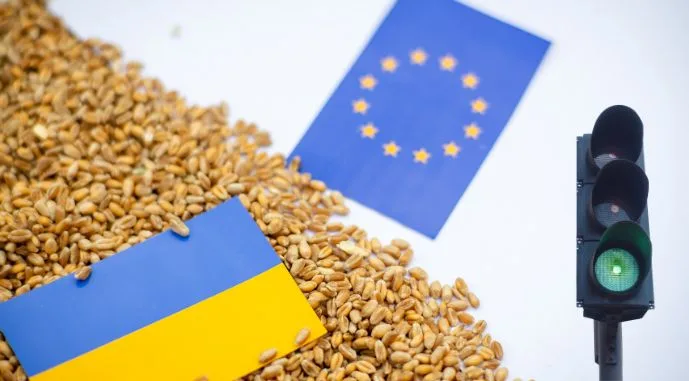
Experts recommend that domestic farmers do not rush into direct risky contracts, but gradually build up their export potential. Let's consider the four most effective and safest tools for finding business partners in the EU.
1. Cooperation with Ukrainian traders-exporters
For beginning farmers who do not have experience in international trade, the easiest and safest step is to sell products through domestic grain traders or specialized exporters.
In this case, the manufacturer sells the product directly from its warehouse (on EXW or FCA terms). The intermediary company takes care of all the logistics, customs clearance, insurance and preparation of permit documents. Although the business margin will be slightly lower, the farmer completely eliminates currency and legal risks.
2. Uniting into agrarian cooperatives and associations
The European market dictates strict requirements for volumes and regularity of deliveries. It is difficult for small farms alone to attract the interest of large European counterparties. The way out of the situation is cooperation.
Participation in specialized agricultural cooperatives or industry associations allows producers to:
Form large homogeneous batches of goods;
Co-finance expensive product certification;
Optimize logistics and marketing costs;
Act as a strong and reliable player in negotiations with European networks.
3. Participation in international B2B exhibitions and forums
For those companies that seek to work directly with European processing plants or retailers, specialized international exhibitions remain a classic tool.
Although participation in overseas events requires significant financial investment and training, this channel of communication is the most effective for concluding direct contracts. One successful contract signed at the exhibition usually fully covers all travel and stand costs. In addition, it is a great way to evaluate competitors and analyze current trends in the EU market.
4. Finding partners through digital platforms and LinkedIn
Modern digital technologies have radically changed approaches to the search for counterparties. Specialized B2B platforms such as Europages, Kompass, as well as local European marketplaces are increasingly being used to promote niche cultures and organics.
An important trend: Recently, European buyers (especially from the Netherlands, Germany and Austria) are actively looking for reliable Ukrainian suppliers of raw materials through the LinkedIn professional network. A well-designed English-language company profile with a clear product description can become a free and effective lead generation channel.
The main requirements of the European market for imports
Quality harvest is only half the success. In order to successfully sell products in the EU, Ukrainian agribusiness must meet the strict regulatory standards of the European community.
Modern buyers pay special attention to three key factors:
Traceability of origin (Traceability): the ability to track every stage of production from the field to the counter.
Food safety: full compliance with EU standards regarding the content of pesticides, nitrates and other substances.
International certification: availability of quality certificates recognized in Europe (GlobalG.A.P., Organic Standard, ISO, HACCP, etc.).
Implementation of these standards requires time and effort, but they are the ones that open the door to the premium and high-margin market of the European Union for Ukrainian farmers.

 EN
EN